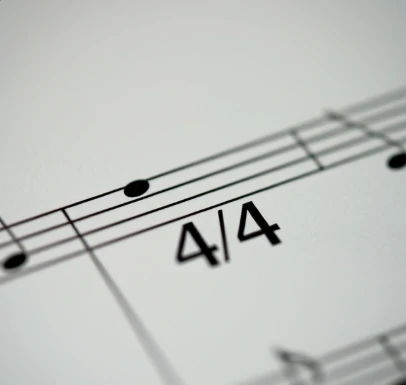
The time signature appears at the beginning of a piece, after the clef and key signature, and tells how many beats are in each measure and what note value represents one beat. Common examples are 4/4, 3/4, and 6/8.
The upper number indicates the number of beats per measure; the lower number indicates the note value that equals one beat. Time signatures orient the performer to the metric framework and help in counting and organizing the rhythm. Some pieces change time signature frequently; others remain in one meter throughout.
Understanding time signatures is essential for accurate reading of rhythm. Conductors use standard patterns that correspond to the principal time signatures. Composers choose meters to support the character of the music—march-like, waltzing, flowing, or irregular.
- Indicates beats per measure and beat unit
- Written as two numbers at the start of the staff
- Defines the metric framework
- Can change during a piece
Comments
No comments yet. Be the first to share a thought.
Leave a comment