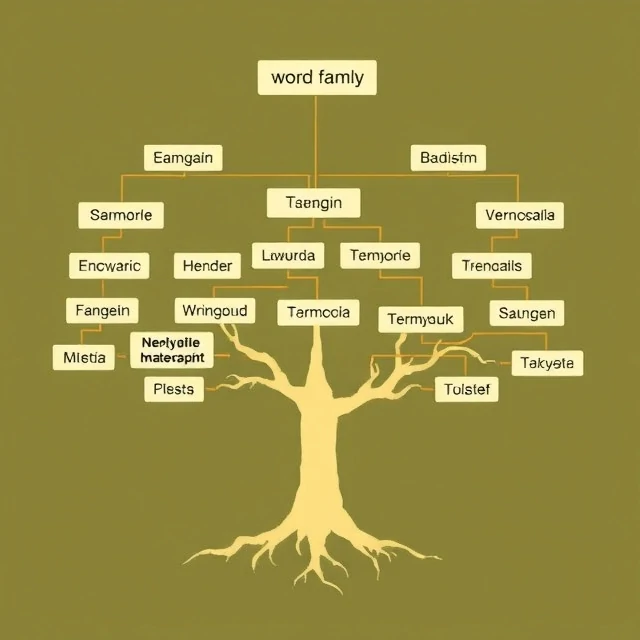
New words often grow from old ones. Derivation is the morphological process of forming a new lexical item by adding affixes or applying other word-formation operations to an existing base.
Derivational affixes can change meaning and often word class—happy to happiness, write to rewrite. Unlike inflection, derivation typically creates new dictionary entries rather than grammatical variants of the same word. Languages differ in how productive particular derivational patterns are.
Speakers use derivation to expand vocabulary without inventing wholly new roots. Historical change can make derived forms opaque so that speakers no longer feel the connection. Morphologists map derivational networks to show how a lexicon coheres internally.
- Formation of new words from existing bases
- Often changes meaning or word class
- Distinct from inflectional marking
- Major source of vocabulary growth
Comments (2)
Leave a comment