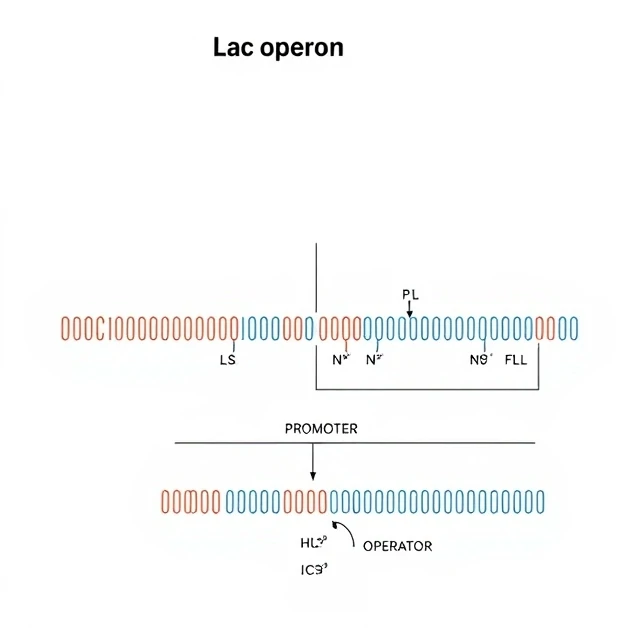
Bacteria often coordinate the expression of related genes. An operon is a cluster of genes transcribed together as a single messenger RNA under the control of a common promoter and operator. The lac operon of E. coli is the classic example.
When the repressor protein binds the operator, transcription is blocked. Inducer molecules or other signals relieve repression, allowing the genes to be expressed. This efficient arrangement lets the cell respond rapidly to environmental changes such as nutrient availability.
Operons are rare in eukaryotes, where genes are usually transcribed individually. Synthetic biologists construct artificial operons to control multiple genes in engineered circuits. The concept remains central to understanding prokaryotic gene regulation.
- Cluster of co-transcribed bacterial genes
- Controlled by a shared promoter and operator
- Allows coordinated expression
- Classic example is the lac operon
Comments
No comments yet. Be the first to share a thought.
Leave a comment