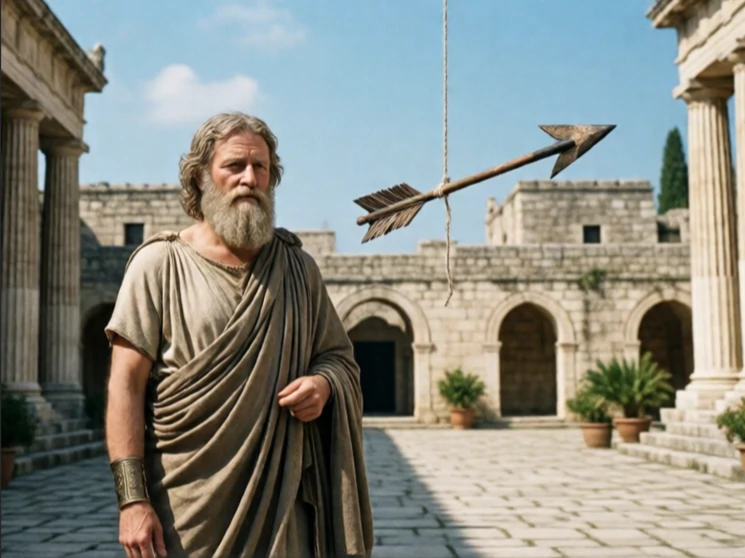
Some statements refuse to sit still. A paradox is a claim that seems to lead, by valid reasoning, to a contradiction or to an absurd conclusion. The classic examples still bite. “This sentence is false” leaves logic with nowhere to stand. Zeno’s arrow, forever frozen in flight yet somehow arriving, forces a confrontation with the nature of motion and infinity.
Philosophers distinguish several kinds. Logical paradoxes threaten the consistency of a formal system. Semantic paradoxes, like the liar, turn on the self-reference of language. Practical paradoxes appear in decision theory or ethics: the unexpected hanging paradox, or the prisoner’s dilemma, where individually rational choices produce collectively worse outcomes. Scientific practice also generates them—Schrödinger’s cat is both alive and dead until observed, at least according to one reading of quantum mechanics.
Not every paradox is a dead end. Many have driven progress. Russell’s paradox forced a rebuilding of set theory. The unexpected hanging led to sharper thinking about knowledge and common knowledge. Even when a paradox resists full resolution, it marks a place where ordinary assumptions break down and new distinctions become necessary.
- Self-reference is a frequent source of trouble.
- Infinity and continuity generate many of the oldest puzzles.
- Some paradoxes dissolve once hidden ambiguities are removed; others remain stubborn.
A good paradox does not merely confuse; it reveals the edge of what we thought we understood.
Comments
No comments yet. Be the first to share a thought.
Leave a comment