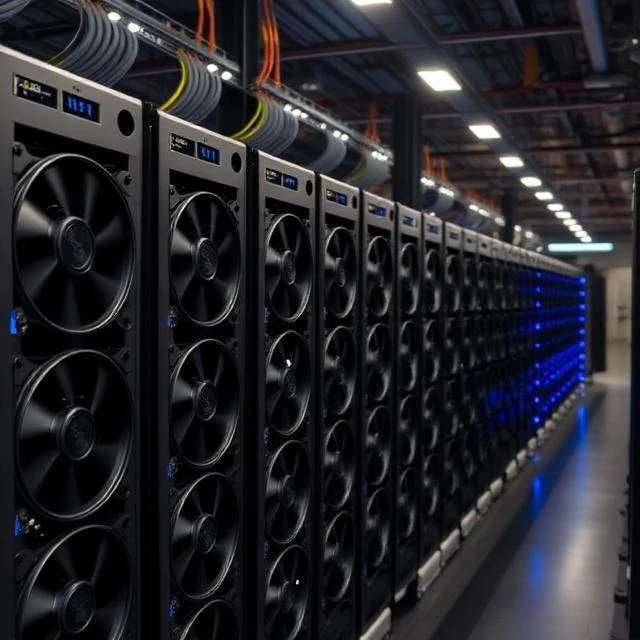
Proof of work secures a blockchain with computational effort. Miners compete to find a hash below a target value. The first to succeed broadcasts the block and earns the reward. The work is deliberately wasteful. It costs electricity and hardware, and the only purpose is to make cheating expensive. To rewrite a block, an attacker would need to redo all the work for that block and every block after it. On Bitcoin, that cost is prohibitive.
Proof of work was the first consensus mechanism that solved the Byzantine generals problem at scale. Satoshi Nakamoto's insight was to make agreement cost something. Before Bitcoin, digital cash schemes struggled with double spending. Proof of work made double spending impractical because the attacker would need more hash power than the honest network. The downside is energy consumption. Bitcoin mining uses as much electricity as some small countries. Critics call it wasteful. Supporters argue that the energy secures a global settlement network that no one controls. Both are true. Proof of work is robust, battle-tested, and expensive. That combination is why Bitcoin still uses it.
Proof of work properties
- Computational cost — miners spend real resources
- Probabilistic finality — more confirmations mean more security
- Energy intensive — the main criticism
- Battle-tested — running since 2009 without a successful 51 percent attack on Bitcoin
Proof of work is not efficient. It is not meant to be. It is meant to be secure. The inefficiency is the security.
Comments (2)
Leave a comment