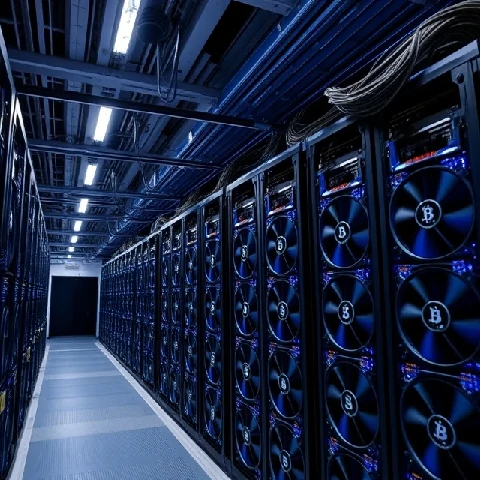
A miner secures a proof-of-work blockchain by spending electricity to find valid blocks. The work is simple to describe: take the block header, add a nonce, hash it, and check if the result is below a target value. If not, change the nonce and try again. Do that billions of times per second and you might find a valid hash. The first miner to succeed broadcasts the block and collects the reward.
Mining is a business. Miners buy ASIC machines, rent warehouse space, and negotiate cheap electricity. The margins are thin. A miner with high power costs gets squeezed out when the price drops or the difficulty rises. Bitcoin's halving cuts the block reward every four years, which forces miners to become more efficient or exit. Mining pools let small miners combine their hash rate and share rewards proportionally. A solo miner with a single ASIC almost never finds a block. Pool mining smooths the income and makes participation practical. Mining is not passive income. It is an industrial operation with real capital costs and real risk.
Miner economics
- Block reward — new coins plus transaction fees
- Electricity cost — the dominant ongoing expense
- Hash rate — how much computing power the miner contributes
- Pool fees — a percentage paid to the pool operator
Mining centralizes around cheap power. That is an economic reality, not a design flaw. The protocol does not care who mines, only that someone does.
Comments
No comments yet. Be the first to share a thought.
Leave a comment