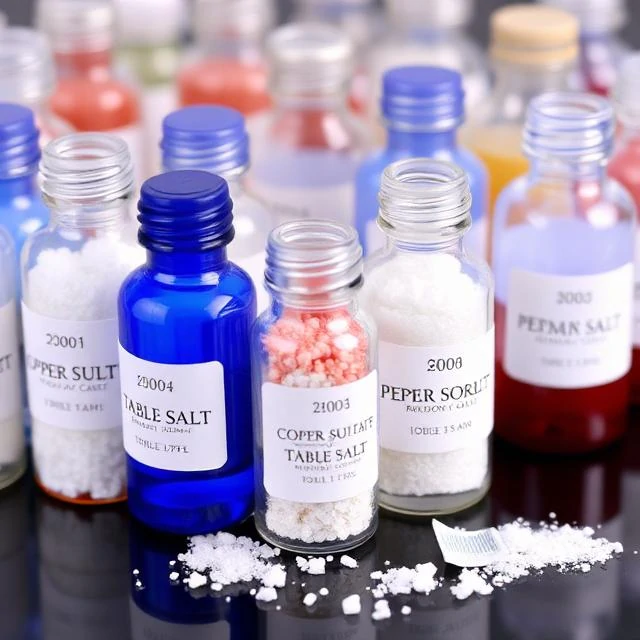
Table salt, baking soda, quartz, and rust. These are inorganic compounds, generally defined as compounds lacking carbon-hydrogen bonds. The distinction between organic and inorganic is not absolute. Carbon dioxide and carbonates contain carbon but are usually classified as inorganic. The term is a historical artifact, but it remains useful for organizing chemistry.
Inorganic compounds include salts, oxides, hydroxides, acids, bases, and minerals. They are held together by ionic or covalent bonds. They tend to have high melting points and are often soluble in water. They conduct electricity when dissolved or molten if they are ionic. They are found in rocks, minerals, and the Earth's crust. They are also essential in biology. Hemoglobin contains iron. Bones contain calcium phosphate. DNA contains phosphate groups.
Inorganic chemistry studies the properties and reactions of these compounds. It covers coordination complexes, organometallic compounds, solid-state chemistry, and bioinorganic chemistry. It is essential for understanding catalysis, materials science, and environmental chemistry. The periodic table is the map of inorganic chemistry, organizing elements by their properties and reactivities.
Inorganic compounds are used in fertilizers, pigments, catalysts, batteries, and medicines. Ammonia is a fertilizer. Titanium dioxide is a pigment. Platinum is a catalyst. Lithium cobalt oxide is a battery material. Cisplatin is a chemotherapy drug. The field is diverse and economically important.
Comments
No comments yet. Be the first to share a thought.
Leave a comment