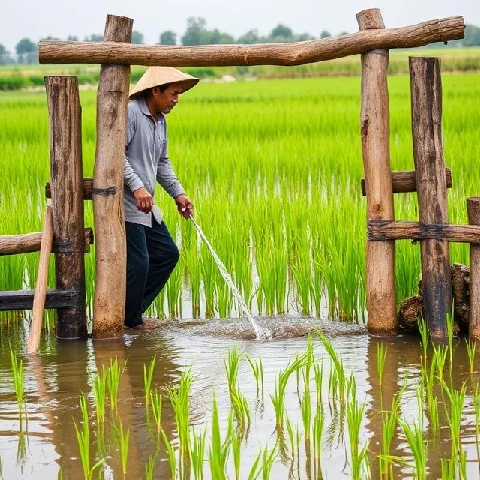
Flood irrigation is exactly what it sounds like: water is released across a field and allowed to spread and soak in. Farmers in Mesopotamia, Egypt, and China used the technique thousands of years ago, and it is still common in rice paddies and orchards today.
There are several versions. In basin flooding, level plots are surrounded by low earth ridges and filled like shallow ponds. Furrow flooding sends water down narrow channels between crop rows. Wild flooding lets water spread wherever it will, which is cheap but uneven.
Trade-offs
- Low equipment cost and simple operation
- Large losses to evaporation and deep percolation
- Risk of waterlogging and salt buildup in dry climates
- Suited to flat land and thirsty crops like rice
Where water is scarce, drip and sprinkler systems have largely replaced flood methods. But in regions with abundant surface water and level ground, flooding remains practical, especially when combined with land levelling and tailwater recovery.
Comments (2)
Leave a comment