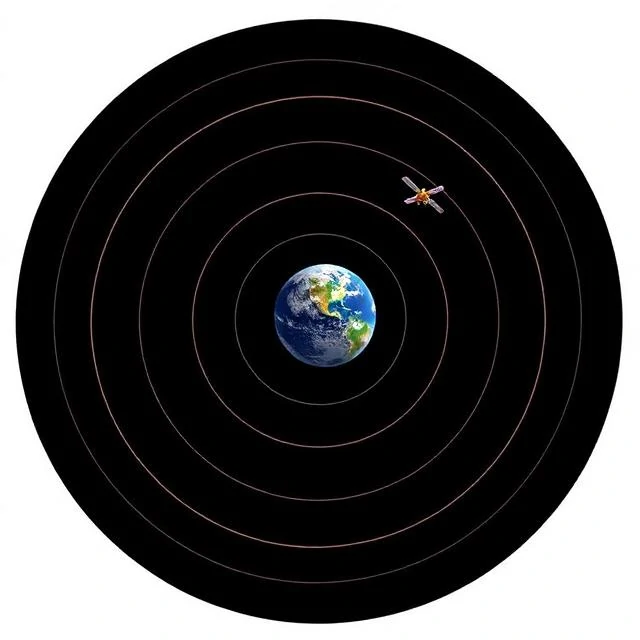
Throw a ball and it falls in a curve. Throw it fast enough and the curve matches Earth's surface, so it keeps falling forever. That is an orbit, and orbital mechanics describes how objects move under gravity in space.
The field is unforgiving. A small error at the wrong moment compounds into a large miss later. Mission planners calculate burns weeks or months in advance, accounting for gravity from multiple bodies and the effects of solar radiation pressure.
Core concepts
- Kepler's laws of planetary motion
- Delta-v, the change in velocity needed for a manoeuvre
- Transfer orbits between two bodies
- Gravity assists from planets
Everything depends on delta-v. Fuel is mass, mass is cost, and every manoeuvre must be justified. Mission designers often choose slower, more complex routes because they need less propellant.
Comments
No comments yet. Be the first to share a thought.
Leave a comment