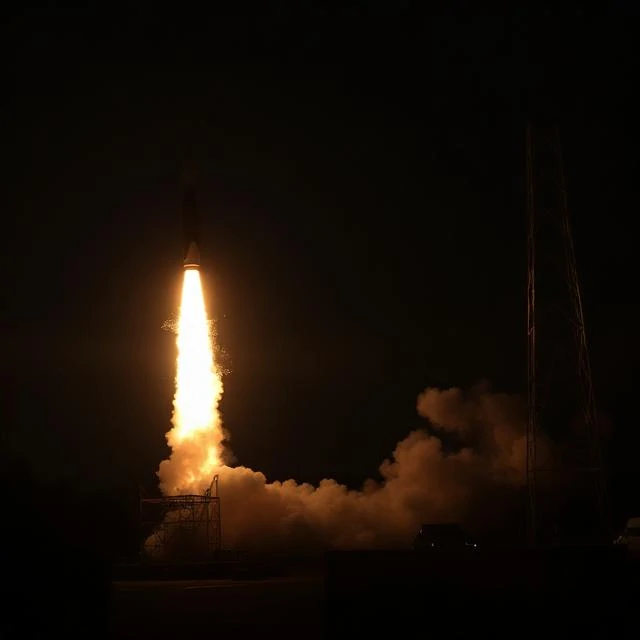
One rocket cannot do it all. Carrying empty tanks and spent engines wastes fuel, so engineers stack stages. Each stage burns its propellant, then separates and falls away. The remaining vehicle is lighter and can accelerate further.
The mathematics is brutal. Reaching orbit requires a velocity change of roughly 9.4 kilometres per second, and the mass ratio needed to do that in one stage would be absurd. Staging splits the problem into manageable pieces.
Common staging configurations
- Two-stage vehicles for low orbit
- Three-stage vehicles for escape trajectories
- Parallel staging with strap-on boosters
- Serial staging with stacked core stages
Separation is a critical moment. Explosive bolts or pneumatic systems release the spent stage, and small motors push it clear. If the stages fail to separate cleanly, the mission ends immediately.
Comments (2)
Leave a comment