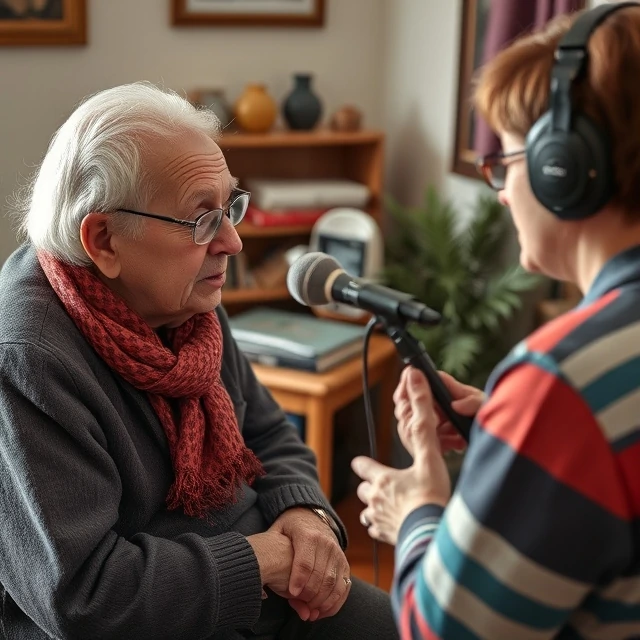
Not every past is written down. Oral history collects and preserves personal testimony about the past through recorded interviews. It captures voices and experiences that official documents often omit.
Interviewers prepare questions, record conversations, and deposit the resulting audio or video along with transcripts in archives. The method has been especially important for recovering the histories of marginalized groups, workers, migrants, and survivors of trauma. Memory is selective and shaped by later events; careful interpretation accounts for that shaping.
Oral history complements rather than replaces documentary research. It adds texture, emotion, and perspective. Ethical practice requires informed consent, respect for narrators, and clear agreements about use and access. The recordings themselves become primary sources for future researchers.
- Historical information gathered through interviews
- Preserves personal and marginalized perspectives
- Requires careful interpretation of memory
- Produces archived audio, video, and transcripts
Comments
No comments yet. Be the first to share a thought.
Leave a comment