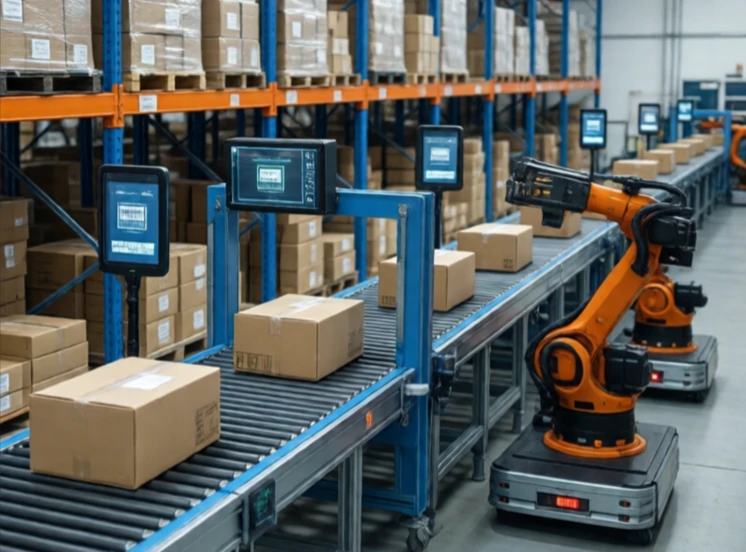
Automation uses technology to perform tasks with minimal human intervention. It ranges from a simple thermostat that turns on a furnace to a fully automated factory that runs in the dark. The common thread is a system that senses, decides, and acts without a person in the loop.
The word took hold in the 1940s at Ford Motor Company, describing the automatic handling of parts between machines. Since then, automation has moved through manufacturing, agriculture, logistics, and office work. Each wave has displaced some jobs and created others. The net effect is debated, but the direction is not. More tasks are automated every year.
Levels of automation
- Fixed automation: single task, high volume, no flexibility.
- Programmable automation: changeable sequence, batch production.
- Flexible automation: adaptable to different products.
- Integrated automation: entire facility controlled by computers.
- Autonomous automation: systems that learn and adapt.
Automation works best on tasks that are repetitive, dangerous, or precise beyond human capability. It struggles with tasks that require judgment, creativity, or handling unpredictable objects. That boundary is shifting as machine learning improves. The warehouse robot that once could only move shelves now picks individual items. The tractor that followed a straight line now avoids obstacles. Automation is not all or nothing. It is a spectrum, and most workplaces sit somewhere in the middle.
Comments
No comments yet. Be the first to share a thought.
Leave a comment