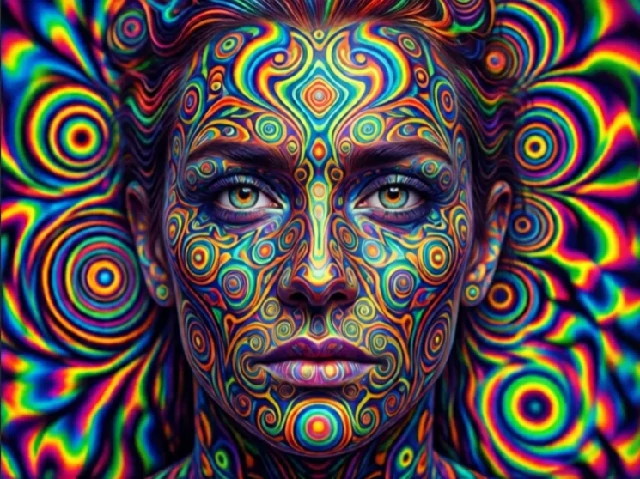
Hallucinogens are drugs that distort perception, thought, and mood, often producing sensory experiences that have no corresponding external stimulus. They can alter the sense of time, self, and reality.
Classic hallucinogens such as LSD, psilocybin, and mescaline act primarily as agonists at certain serotonin receptors. Effects include vivid visual imagery, intensified colors, synesthesia-like blending of senses, and profound changes in emotional and philosophical perspective. Dissociative drugs such as PCP and ketamine act on glutamate systems and can produce a sense of detachment from the body. Cannabis occupies a borderline category; at higher doses it can produce mild hallucinogenic effects.
The experiences are highly variable and depend on dose, set, and setting. Adverse reactions include anxiety, paranoia, and, rarely, prolonged psychotic-like states. Some hallucinogens are under clinical investigation for depression, anxiety, and addiction, with carefully controlled protocols. Recreational use carries legal and psychological risks that vary by substance and individual vulnerability.
Hallucinogens temporarily rewrite the relationship between the brain and the world it constructs.
Comments
No comments yet. Be the first to share a thought.
Leave a comment