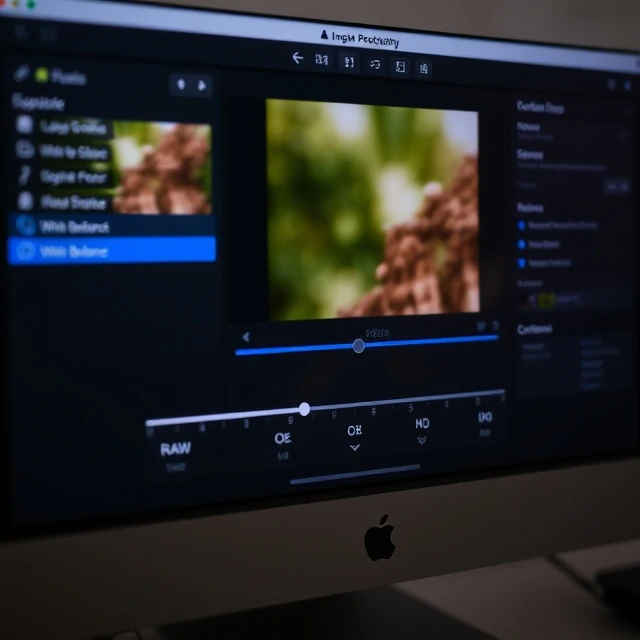
RAW is not a file format. It is a category of file formats. Every camera manufacturer has its own RAW format: CR2 and CR3 for Canon, NEF for Nikon, ARW for Sony, RAF for Fujifilm. RAW files contain all the data the sensor captured, with no processing applied. The camera does not sharpen, adjust contrast, or correct white balance. It just records the raw data. That data must be processed in software before the image can be shared or printed.
RAW offers more flexibility than JPEG. Because the data is unprocessed, you can adjust exposure, white balance, and contrast without losing quality. You can recover highlights and shadows that would be lost in a JPEG. You can change the color temperature after the fact. The trade-off is size and workflow. RAW files are much larger than JPEGs. They require more storage, more computing power, and more time. They also require software that can read them. Not all cameras shoot RAW. Not all photographers need it. For snapshots and casual shooting, JPEG is fine. For critical work, RAW is the standard.
RAW advantages
- Flexibility. Adjust exposure and white balance after the fact.
- Recovery. Recover highlights and shadows.
- Quality. No compression artifacts.
- Control. You decide how the image is processed.
RAW is not a magic bullet. A bad exposure is still a bad exposure. But RAW gives you more room to fix it.
Comments
No comments yet. Be the first to share a thought.
Leave a comment