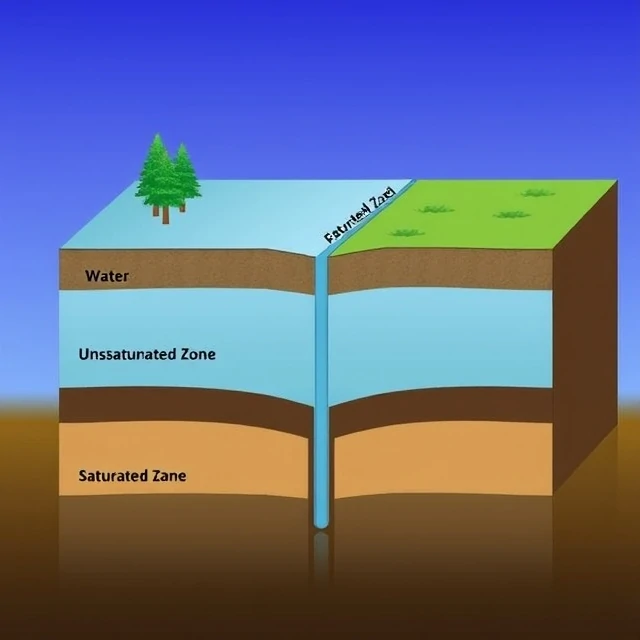
Below a certain depth the pores of soil and rock are completely filled with water. The water table is the upper surface of that saturated zone. Above it lies the unsaturated or vadose zone, where pores contain both air and water.
The water table roughly follows the topography but with less relief. It rises with recharge from rainfall and falls during droughts or heavy pumping. Where the water table intersects the land surface, springs, lakes, or wetlands appear. In unconfined aquifers the water table is free to move up and down.
Depth to the water table determines the feasibility of shallow wells and the risk of groundwater contamination from surface spills. Monitoring wells track its fluctuations over time. Understanding the water table is fundamental to hydrogeology and to the management of groundwater resources.
- Upper surface of the saturated zone
- Separates unsaturated and saturated ground
- Rises and falls with recharge and discharge
- Critical for wells and groundwater protection
Comments
No comments yet. Be the first to share a thought.
Leave a comment