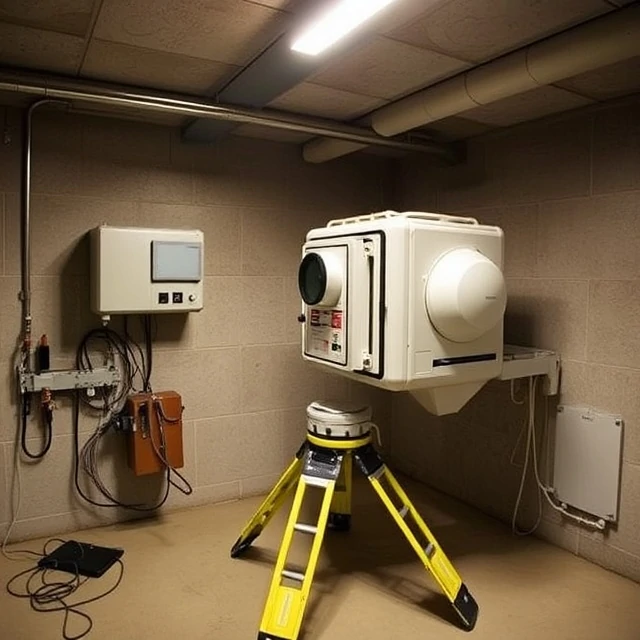
Ground motion from distant earthquakes is measured by sensitive instruments. A seismograph records the arrival and amplitude of seismic waves as a function of time. Modern instruments are electronic and digital; early ones used suspended masses and smoked-paper drums.
The principle relies on inertia: a mass tends to remain at rest while the ground moves beneath it. Relative motion is converted into an electrical signal and stored. Networks of seismographs allow precise location of earthquake sources by triangulation of arrival times.
Seismographs operate continuously in global and regional networks. They detect events ranging from tiny microearthquakes to the largest recorded shocks. Data from seismographs underpin both fundamental research into Earth’s structure and the practical tasks of earthquake monitoring and early warning.
- Instrument that records ground motion
- Detects and times seismic waves
- Essential for locating earthquakes
- Operates in continuous global networks
Comments
No comments yet. Be the first to share a thought.
Leave a comment