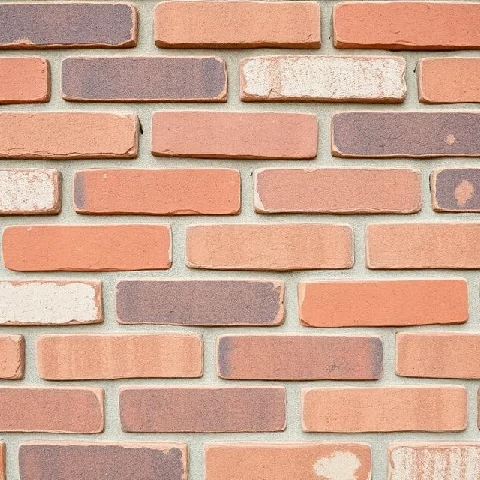
Brickwork is construction made by laying bricks in mortar. It is one of the oldest building methods and still one of the most common. A brick is a rectangular block of fired clay, strong in compression, durable, and modular. A bricklayer stacks the bricks in a pattern called a bond, spreading mortar between each course. The bond distributes loads and ties the wall together. Running bond, English bond, and Flemish bond are the most common. Each has a different look and structural behavior.
Brickwork can be structural or veneer. A solid brick wall carries its own weight and often the floors and roof above it. It is thick, heavy, and requires a foundation. A brick veneer is a single wythe of brick tied to a structural frame, with an air cavity and waterproofing behind it. The brick carries no building load. It is a rain screen. Most modern brick buildings use veneer.
Brickwork has advantages. It ages well. It comes in countless colors and textures. It requires little maintenance. It provides thermal mass and fire resistance. It has disadvantages too. It is labor-intensive. It is prone to cracking if the foundation moves. It absorbs water, so it needs weep holes and flashing. And in seismic zones, unreinforced brick walls are vulnerable. The wall must be anchored to the frame and reinforced at openings. A well-built brick wall can last centuries. A poorly built one can fail in a decade.
Comments
No comments yet. Be the first to share a thought.
Leave a comment