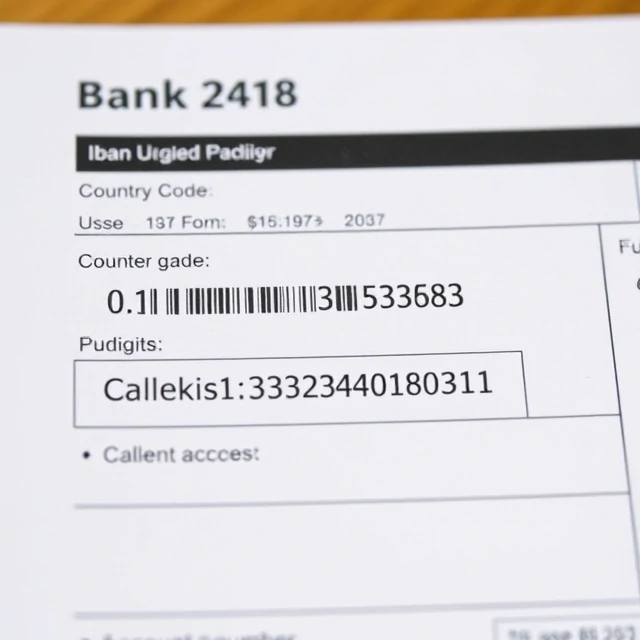
Send money from Germany to Spain and you will need an IBAN. The International Bank Account Number identifies an account across borders with a standard format that banks and payment systems can process automatically. It starts with a two-letter country code, followed by two check digits, then a country-specific sequence of characters identifying the bank and the account.
Length varies by country. A German IBAN has 22 characters. A Norwegian one has 15. A Maltese one has 31. The check digits allow software to catch typing errors before a payment is sent. That matters because international transfers are difficult to reverse. Once the money arrives in the wrong account, recovering it depends on the recipient's cooperation and the local bank's rules.
The IBAN system grew out of a 1997 agreement by the European Committee for Banking Standards and is now used in over 80 countries, mostly in Europe, the Middle East, and parts of Africa and the Caribbean. It is not used in the United States, Canada, or Australia for domestic payments, though those countries can receive IBAN payments from abroad.
An IBAN is not the same as a SWIFT code. The SWIFT code identifies the bank. The IBAN identifies the specific account at that bank. International wires usually require both.
Comments
No comments yet. Be the first to share a thought.
Leave a comment