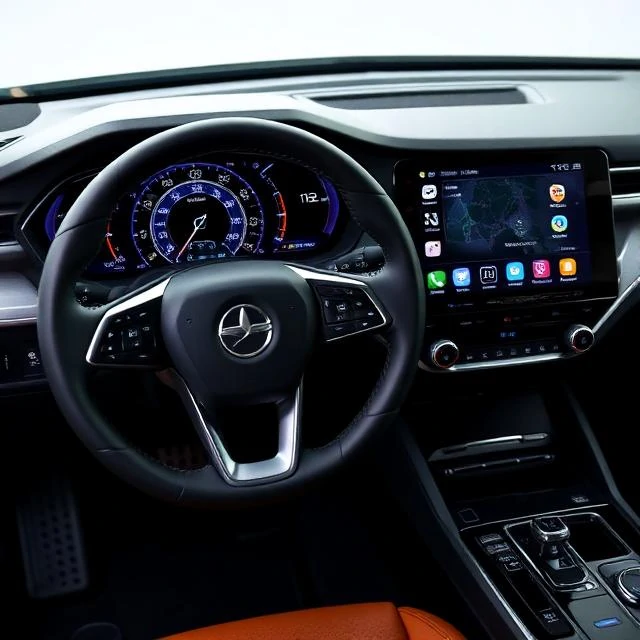
The dashboard is the panel in front of the driver. It houses instruments, controls, and often the infotainment screen. The name comes from the board that shielded horse-drawn carriage drivers from debris kicked up by the horses. In early cars, the dashboard was a simple wooden board with a few gauges. Now it is a complex assembly of plastic, electronics, and safety systems.
The instrument cluster sits directly behind the steering wheel. It includes the speedometer, tachometer, fuel gauge, and temperature gauge. Warning lights for oil pressure, battery, brakes, and check engine are also there. In modern cars, the cluster is often a digital screen that can be configured by the driver. Some cars have head-up displays that project speed and navigation onto the windshield.
The center stack holds the infotainment system, climate controls, and audio. Touchscreens have replaced many physical buttons, a trend that has drawn criticism because touchscreens require the driver to look away from the road. Some manufacturers are bringing back physical knobs for climate and volume.
The dashboard is also a safety component. It contains the passenger airbag and is designed to absorb energy in a crash. The materials must resist heat, UV light, and years of use without cracking. It is one of the most complex parts of a car's interior.
Comments
No comments yet. Be the first to share a thought.
Leave a comment