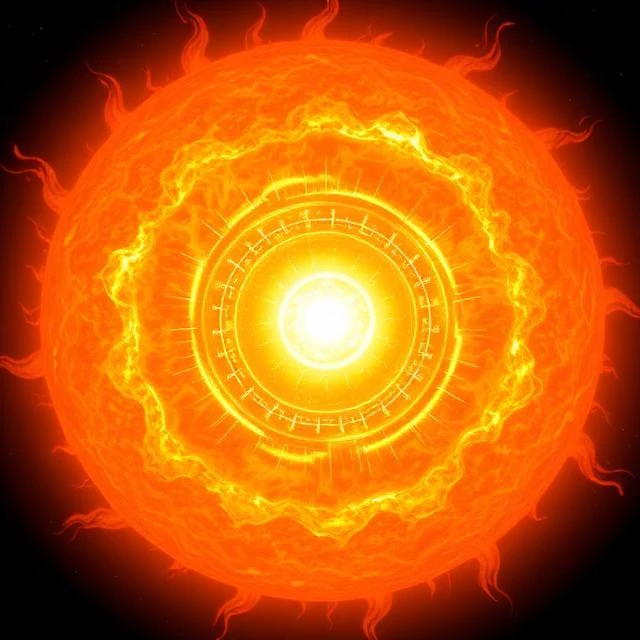
Nuclear fusion powers the stars. It is the process of merging light atomic nuclei into heavier ones, releasing energy in the process. In the Sun's core, hydrogen nuclei fuse into helium, and the tiny mass difference is converted into energy according to Einstein's equation, E equals mc squared. That energy takes tens of thousands of years to work its way to the surface, then eight minutes to reach Earth.
Fusion requires extreme conditions. The positively charged nuclei repel each other, so they must be moving fast enough to overcome that repulsion. In the Sun, gravity provides the pressure and temperature needed, about 15 million Kelvin. On Earth, scientists use magnetic confinement or lasers to recreate those conditions, but the challenges are immense.
Fusion has enormous potential as an energy source. Its fuel is abundant, its waste is short-lived compared to fission, and it produces no greenhouse gases. The problem is that no one has yet built a fusion reactor that produces more energy than it consumes. The National Ignition Facility achieved net energy gain in 2022, a milestone, but commercial fusion remains decades away.
The same process that lights the stars may one day light our cities.
Comments
No comments yet. Be the first to share a thought.
Leave a comment