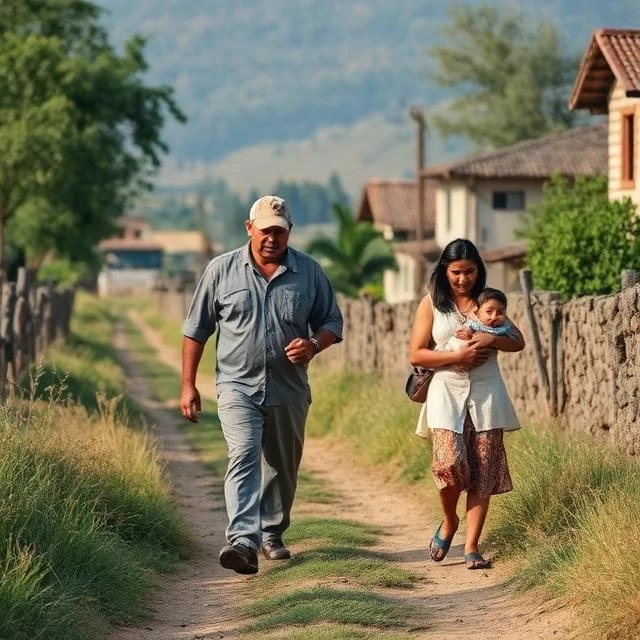
Patrilineal descent traces ancestry and group membership through the father's line. A child belongs to the father's lineage, inherits property through him, and often lives near his relatives. This is the most common unilineal system in the world. It appears in societies as varied as ancient Rome, traditional China, the Nuer of Sudan, and many Middle Eastern and European cultures.
Patrilineal systems shape marriage, residence, and authority. Wives typically move to the husband's village, a pattern called patrilocality. Land passes from father to sons. Political offices and ritual roles follow the male line. Women may have limited rights to lineage property, though their position varies widely. In some patrilineal societies, women retain strong ties to their natal families. In others, marriage severs those ties almost completely.
Common features
- Children belong to the father's lineage.
- Inheritance passes from father to son.
- Couples often live near the husband's family.
- Authority rests with senior men of the lineage.
Patrilineal descent is not the same as patriarchy, though the two often overlap. Descent is about group membership. Patriarchy is about power.
Comments
No comments yet. Be the first to share a thought.
Leave a comment