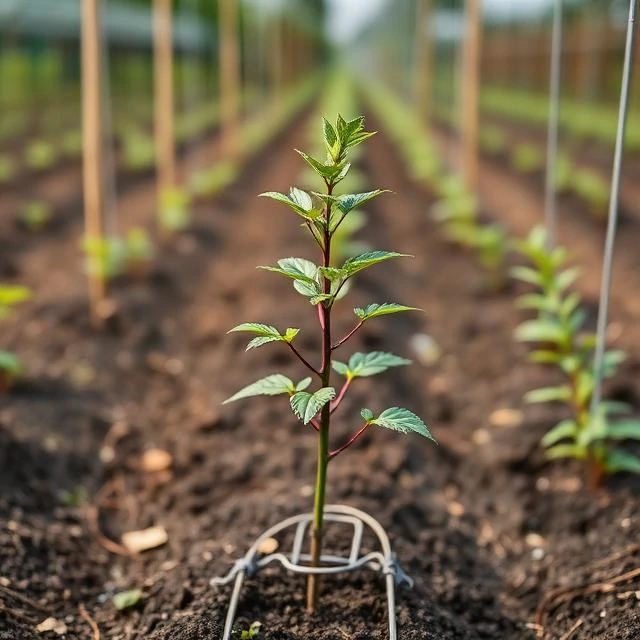
A sapling is a young tree, past the seedling stage but not yet mature. The usual definition is a tree between one and three years old with a trunk diameter of a few centimetres. Saplings are tall and thin, with flexible stems and a small crown compared to an adult tree.
In forestry and orchard work, saplings are a critical stage. They are vulnerable to deer browsing, frost, drought, and competition from weeds. Many are staked or caged for protection. Nurseries raise them in rows, transplanting and root-pruning to build strong root systems before sale. Orchardists buy grafted saplings of a specific variety and rootstock, then plant them at their final spacing.
Why the stage matters
- Survival rates are lowest in the first two years
- Pruning at this stage shapes future form
- Water and weed control decide whether the tree thrives
- Deer, rabbits, and voles cause heavy losses
A well-grown sapling planted in the right spot will outlive the person who planted it. That long horizon is why foresters and orchardists spend so much time getting the early years right.
Comments
No comments yet. Be the first to share a thought.
Leave a comment