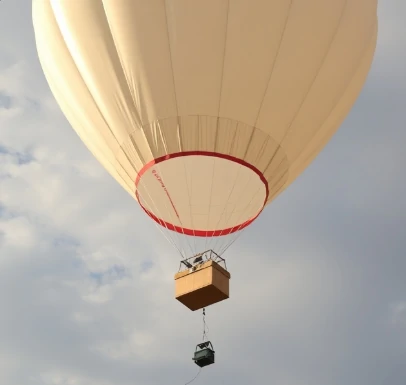
Twice a day at hundreds of sites around the world, large balloons are filled with hydrogen or helium and released into the sky. Each carries a radiosonde that measures temperature, humidity, and pressure as it ascends, and often wind as well.
The balloon expands as the air pressure decreases and eventually bursts in the stratosphere. The instrument package parachutes back to Earth, though recovery is not always possible. The data are transmitted in real time and assimilated into weather models within minutes.
Upper-air observations from weather balloons remain essential for initializing numerical forecasts. They provide vertical profiles that satellites and ground instruments cannot fully replace. Special research balloons carry additional instruments for specific experiments.
- Balloon carrying instruments aloft
- Measures temperature, humidity, pressure, wind
- Launched routinely worldwide
- Critical for model initialization
Comments
No comments yet. Be the first to share a thought.
Leave a comment