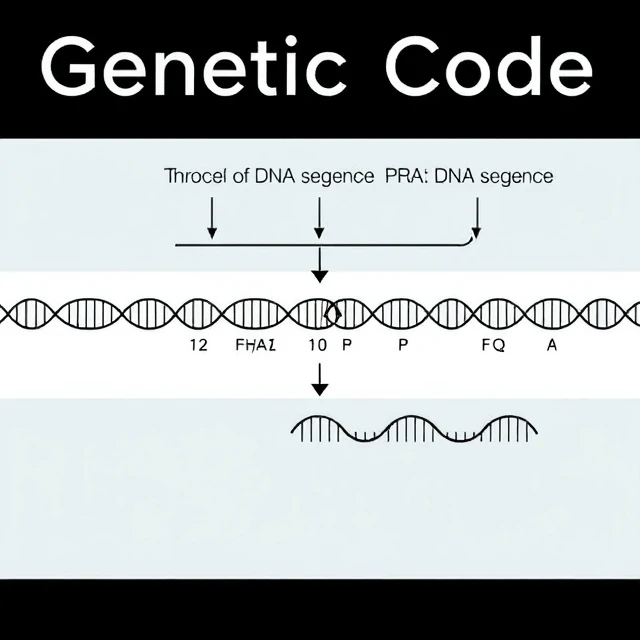
The language that links nucleic acids to proteins is remarkably consistent. The genetic code is the set of rules by which nucleotide triplets in messenger RNA are translated into amino acids. Sixty-four codons specify 20 amino acids and three stop signals.
The code is nearly universal across bacteria, plants, and animals, evidence of a common evolutionary origin. Degeneracy means most amino acids are encoded by more than one codon, reducing the impact of certain mutations. Start and stop codons define the boundaries of the open reading frame.
Exceptions exist in mitochondria and some microbes, yet the standard code remains the foundation of molecular biology. Synthetic biologists have expanded the code by assigning new amino acids to unused codons. Understanding the code allows prediction of protein sequences from DNA and design of recombinant genes.
- Rules mapping codons to amino acids
- Nearly universal among organisms
- Degenerate and includes stop signals
- Basis for translating genetic information
Comments (2)
Leave a comment