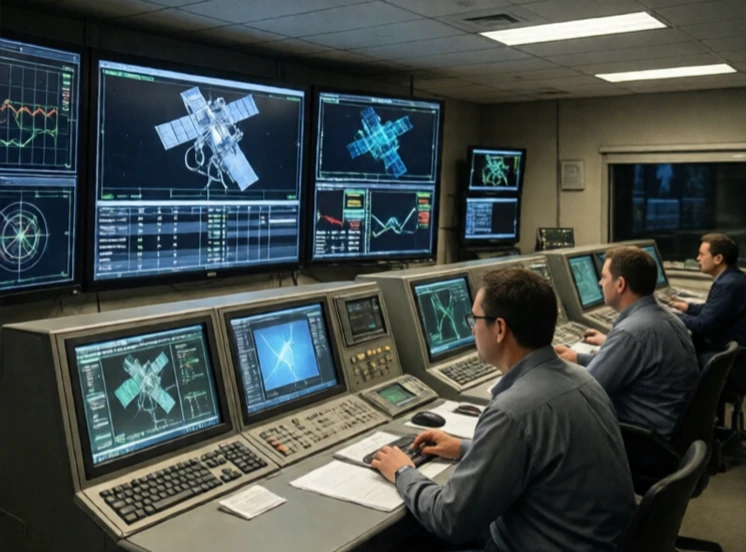
A ground station is a facility that communicates with satellites. It has antennas, receivers, transmitters, and control equipment. It sends commands to satellites and receives data from them. Ground stations are the link between space and Earth. Without them, satellites would be silent.
Ground stations come in different sizes. Large dish antennas track geostationary satellites. Phased array antennas track low Earth orbit satellites. Some ground stations are fixed. Others are mobile. They are located in remote areas to avoid radio interference. They need clear lines of sight to the sky.
Ground station functions
- Telemetry: monitors satellite health
- Command: sends instructions to satellites
- Tracking: follows satellite movement
- Data reception: receives payload data
- Data transmission: uploads software and data
Ground stations are critical infrastructure. They support weather forecasting, GPS, television, and scientific research. Commercial ground station networks lease time to satellite operators. New constellations like Starlink need many ground stations. The space segment gets attention. The ground segment makes it work.
Comments
No comments yet. Be the first to share a thought.
Leave a comment