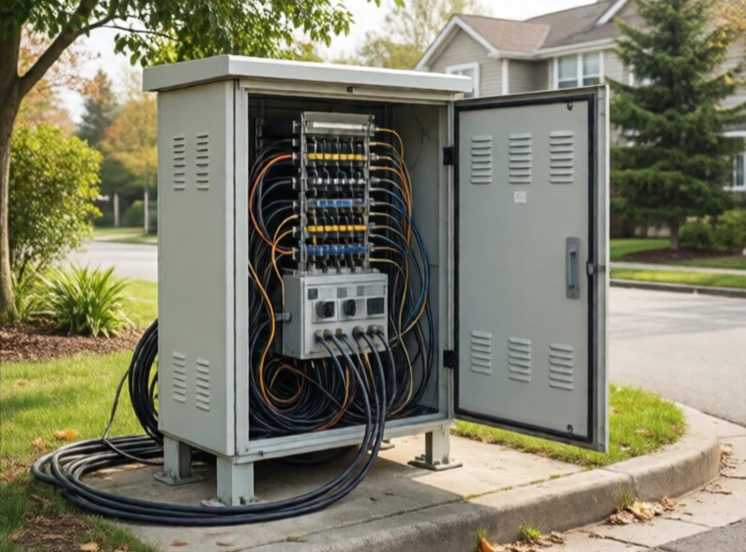
Your home internet connection starts somewhere between your router and the first piece of telecom equipment your provider owns. That stretch is the access network — the part of a network connecting subscribers to the core. It is the local loop, the last mile, the edge. Everything upstream is the core. Everything downstream is you.
Access networks come in several forms. Copper twisted pair carries DSL. Coaxial cable carries cable broadband. Optical fiber carries FTTH. Mobile networks use radio access networks with base stations and antennas. Each technology has different reach, speed, and cost.
Common access technologies
- DSL: internet over existing phone lines
- Cable: broadband over coaxial TV lines
- Fiber: optical connections to homes or cabinets
- Fixed wireless: radio links to a base station
- Mobile: 4G and 5G cellular access
The access network is where bottlenecks live. Core networks have abundant capacity. The last mile often does not. Upgrading it is expensive because it requires digging trenches, stringing cable, or installing radios at every subscriber location.
Comments
No comments yet. Be the first to share a thought.
Leave a comment