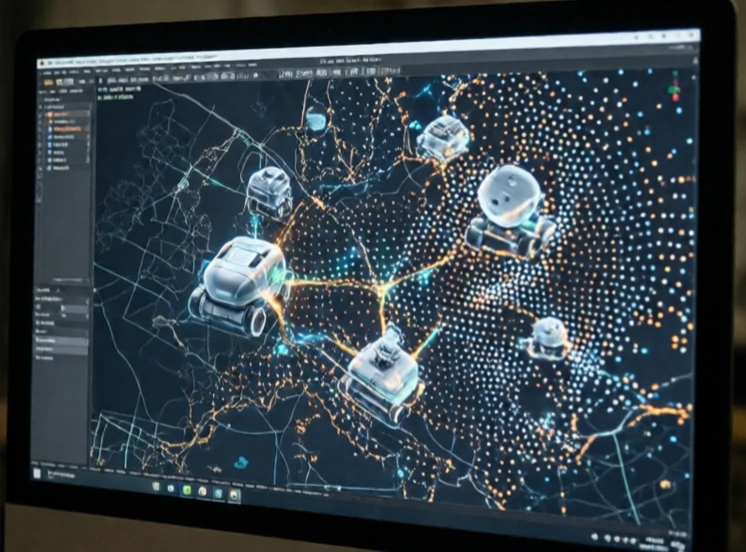
Localization is how a robot knows where it is. Not just on a map, but in the real world, relative to walls, objects, and people. It answers the question: where am I? Without localization, a mobile robot is lost.
GPS works outdoors but fails indoors and under dense tree cover. Wheel odometry drifts. IMU drifts. Cameras and lidar can recognize landmarks, but only if the robot knows roughly where to look. Localization fuses these sources. A particle filter or Kalman filter maintains a probability distribution over possible positions and updates it as new sensor data arrives.
Localization methods
- GPS: absolute position outdoors, meter-level accuracy.
- Odometry: relative motion from wheel encoders.
- Landmark-based: matches sensor data to known features.
- Beacon-based: triangulates from fixed transmitters.
- SLAM: builds a map and localizes within it simultaneously.
Indoor localization is harder than outdoor. GPS does not work. Walls block signals. Reflective surfaces confuse lidar. Wi-Fi and Bluetooth beacons help but are imprecise. Some systems use ultra-wideband radios for centimeter accuracy. Others use visual markers or natural features. The best approach depends on the environment and the required accuracy. A warehouse robot needs centimeter precision to dock at a charger. A delivery robot on a sidewalk can tolerate a meter. Localization is the foundation of autonomy. Without it, the robot cannot plan, navigate, or act reliably.
Comments
No comments yet. Be the first to share a thought.
Leave a comment