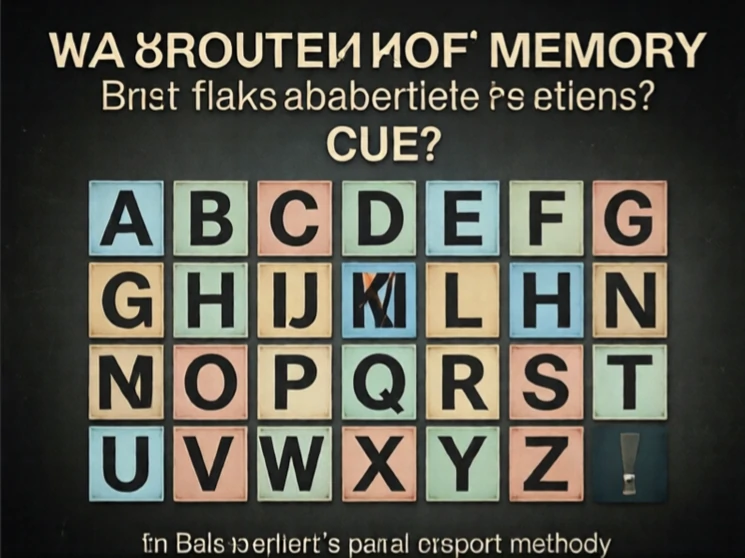
Iconic memory is the brief sensory store for visual information. A visual scene leaves a fading trace that lasts for a fraction of a second after the stimulus has disappeared.
George Sperling’s partial-report experiments demonstrated that the capacity of this store is larger than what people can report. When a grid of letters was flashed briefly, participants could report only a few; yet when cued immediately to report a single row, they could report most of the letters in that row. The cue had to arrive within a few hundred milliseconds; after that the icon had faded. The finding showed that a rich visual representation exists briefly and then decays unless attention transfers selected items into a more durable store.
Iconic memory allows the visual system to integrate information across eye movements and to experience the world as continuous rather than as a series of discrete snapshots. Its duration is far shorter than that of echoic memory, matching the different temporal demands of vision and hearing.
The lingering image after a flash of lightning is a familiar reminder of iconic memory at work.
Comments
No comments yet. Be the first to share a thought.
Leave a comment