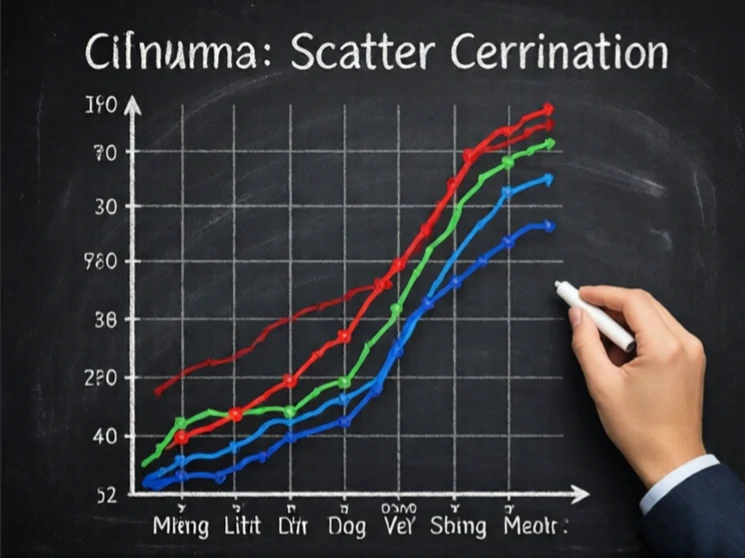
Correlation describes a statistical relationship between two variables. When one variable changes, the other tends to change in a related way. The relationship can be positive—both rise or fall together—or negative—one rises as the other falls.
A positive correlation appears when taller people tend to weigh more, or when study time and exam scores move in the same direction. A negative correlation appears when hours of television and grades move in opposite directions. The strength of the relationship is measured by how tightly the data points cluster around a line; scatterplots make the pattern visible at a glance.
Correlation does not imply causation. A third variable may drive both, or the direction of influence may run opposite to the expected path. Ice-cream sales and drowning deaths rise together in summer, yet neither causes the other. Researchers therefore treat correlation as a starting point for further investigation rather than a final explanation.
In psychology, correlational studies are common when experimental manipulation is impossible or unethical. They map the landscape of relationships that experiments can later test more rigorously.
Comments
No comments yet. Be the first to share a thought.
Leave a comment