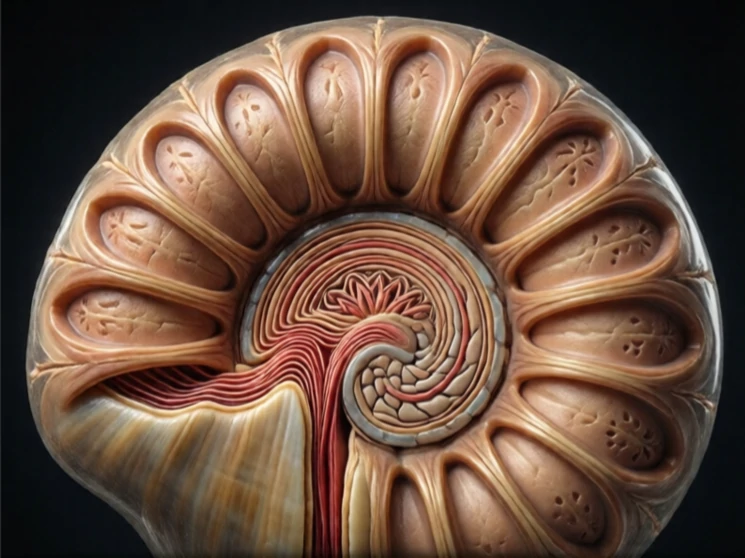
The cochlea is the coiled, fluid-filled structure in the inner ear that converts sound vibrations into neural signals. Its name comes from the Latin for snail shell, which it resembles.
Sound energy arriving from the middle ear sets the cochlear fluid in motion. The motion creates a traveling wave along the basilar membrane, which runs the length of the cochlear spiral. High-frequency sounds produce peaks of vibration near the base; low-frequency sounds peak near the apex. Hair cells seated on the basilar membrane bend with the wave, opening ion channels and generating electrical signals that are transmitted by the auditory nerve. This place coding of frequency is the foundation of pitch perception.
The cochlea is remarkably sensitive yet fragile. Loud noise, certain antibiotics, and aging can destroy hair cells, which in mammals do not regenerate. The resulting sensorineural hearing loss is permanent with current technology, though cochlear implants can bypass the damaged hair cells and stimulate the auditory nerve directly.
Every sound we hear has been analyzed first by the mechanical and neural machinery of the cochlea.
Comments
No comments yet. Be the first to share a thought.
Leave a comment