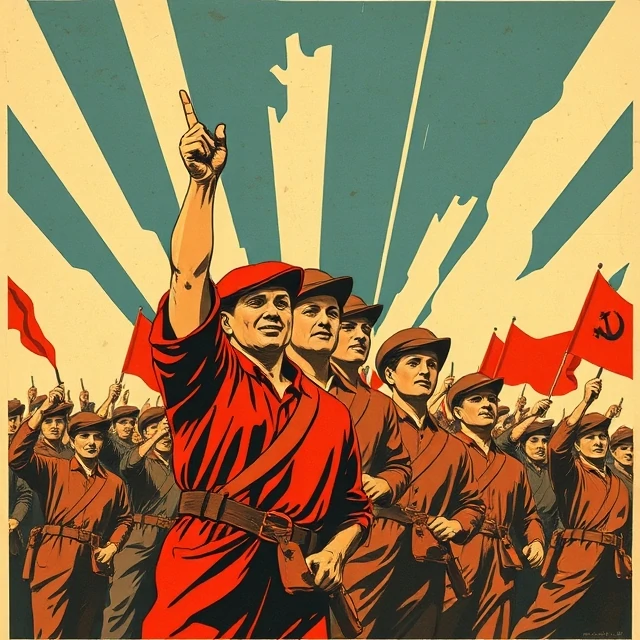
A classless society in which the means of production are commonly owned and distribution follows need is the stated goal of communism. As a political movement and governing ideology, it has taken concrete form in single-party states that claimed to be building that future.
Marxist theory supplied the analytical foundation: history as class struggle, capitalism as a necessary but transitional stage, and proletarian revolution as the path forward. Twentieth-century communist parties seized power in Russia, China, and elsewhere, establishing centralized planning, suppressed political opposition, and extensive state ownership. Results ranged from rapid industrialization to famine, purges, and eventual reform or collapse.
Contemporary communist parties in power have often introduced market mechanisms while retaining political monopoly. The original vision of a stateless, classless society remains unrealized. Debates over communism’s record continue to shape left-wing politics and historical memory in many countries.
- Advocates common ownership and classless society
- Historically linked to single-party rule and planning
- Drew on Marxist analysis of class and capitalism
- Practice diverged sharply from original theory
Comments (2)
Leave a comment