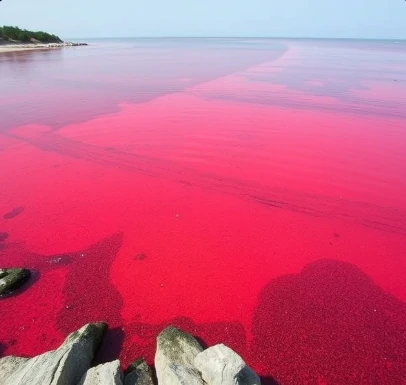
Certain algal blooms become dense enough to discolor the water red, brown, or orange. These events are popularly called red tides, although the term is imprecise and not all harmful blooms produce red water. The discoloration comes from the accessory pigments of the algae, often dinoflagellates.
Some red-tide species produce potent toxins that accumulate in shellfish or kill fish directly. Others simply deplete oxygen when they decay. Coastal communities may close beaches and shellfish beds during major events. Nutrient enrichment, warm stable water, and the presence of resting cysts in sediments can all favor red-tide development.
Monitoring programs use microscopy, toxin assays, and satellite imagery to track blooms and issue public warnings. Predicting the exact timing and location of red tides remains difficult because of the complex interplay of biology and physics. Reducing chronic nutrient pollution lowers the probability of the most severe events.
- Algal bloom that discolors water
- Often caused by dinoflagellates
- Some species produce harmful toxins
- Monitored to protect public health
Comments
No comments yet. Be the first to share a thought.
Leave a comment