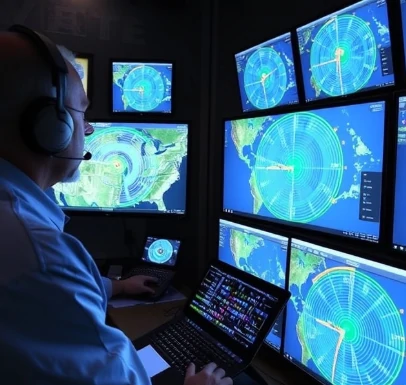
Forecasting the weather for the next few hours requires different methods from longer-range prediction. Nowcasting focuses on that short window, typically zero to six hours ahead. It relies heavily on the latest radar, satellite, and surface observations rather than full numerical models.
Techniques include extrapolating the movement of existing storms, identifying rapid intensification, and using high-resolution local models. The goal is to provide timely warnings for severe thunderstorms, flash floods, and other fast-developing hazards.
Airports, outdoor event organizers, and emergency managers depend on accurate nowcasts. The skill of nowcasting has improved with denser observation networks and faster data processing. Even so, the chaotic nature of small-scale convection still limits perfect accuracy.
Nowcasting fills the critical gap between current observations and traditional forecasts.
Comments
No comments yet. Be the first to share a thought.
Leave a comment