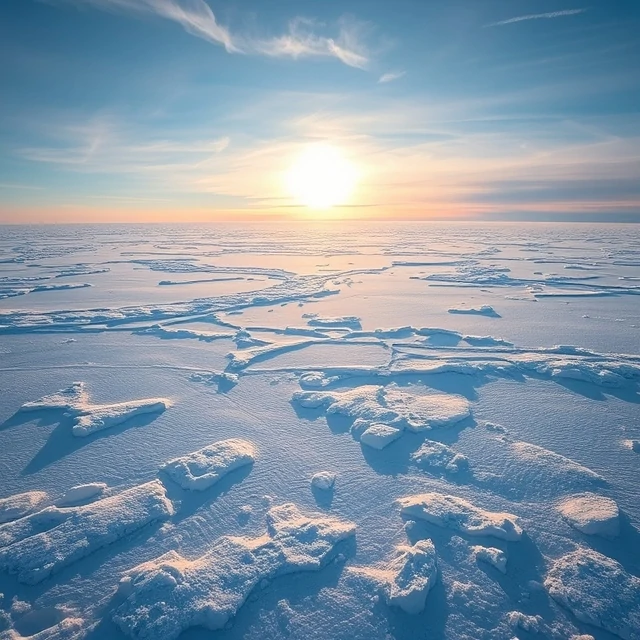
Temperatures stay low enough that ice persists year-round in many locations. A polar climate is characterized by extremely cold winters, cool short summers, and limited precipitation that falls mostly as snow. The Köppen system defines polar climates as those in which no month averages above 10 °C.
Ice caps and tundra are the two main subtypes. The high albedo of snow and ice reinforces the cold by reflecting solar radiation. Polar regions play a critical role in global climate through their influence on ocean circulation and atmospheric patterns.
Climate change is warming the poles faster than the global average, causing ice loss and permafrost thaw. These changes affect global sea level and release stored carbon. Polar climates remain some of the most challenging environments for human activity and some of the most sensitive indicators of planetary change.
- Climate with very cold temperatures year-round
- No month averaging above 10 °C
- Includes ice-cap and tundra subtypes
- Rapidly affected by global warming
Comments
No comments yet. Be the first to share a thought.
Leave a comment