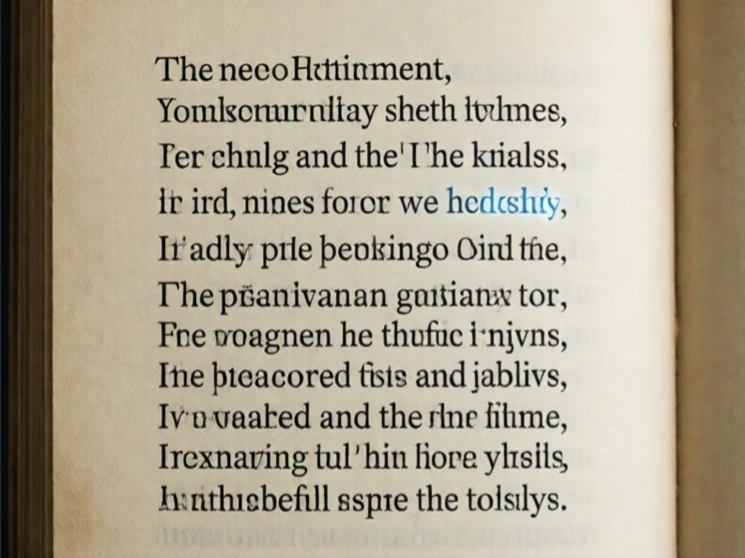
Enjambment is the continuation of a sentence or clause beyond the end of a line of verse without a pause. The thought runs on into the next line.
When a line ends with “the” or “and” or in the middle of a phrase, the reader is pulled forward. The device creates momentum, suspense, or surprise when the completing words arrive. It also allows the poet to play the grammatical unit against the metrical unit, generating tension between the two. Shakespeare, Milton, and many modern poets rely heavily on enjambment to keep blank verse flexible and speech-like.
The opposite is an end-stopped line, in which punctuation and sense close together at the line’s end. Most poems mix the two. Skillful enjambment makes the reader feel the ongoing flow of thought while still registering the rhythm of the lines. When overused without variation, it can blur the verse into prose; when placed with care, it becomes a powerful expressive tool.
A line that refuses to finish its business before the next one begins is using enjambment.
Comments
No comments yet. Be the first to share a thought.
Leave a comment