Charles Darwin and Alfred Russel Wallace described natural selection in 1858. The idea is simple. Individuals in a population vary. Some variations help them survive and reproduce better than others. Those individuals pass their traits to more offspring. Over generations, the helpful traits become more common. The process is not random. Mutation creates variation randomly, but selection is a filter that favors whatever works in a given environment.
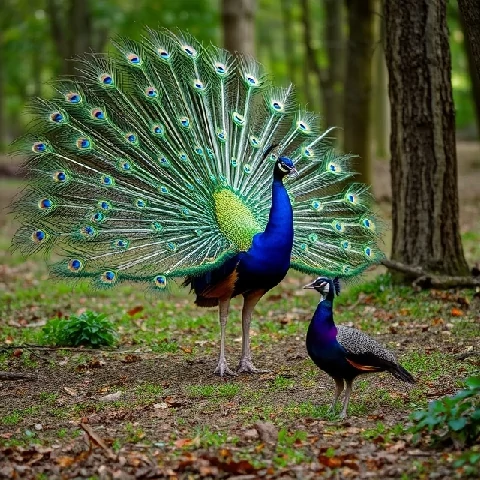
Natural selection takes several forms. Directional selection pushes a trait in one direction, like larger beak size during a drought. Stabilizing selection favors the average and removes extremes, like human birth weight. Disruptive selection favors both extremes over the middle, which can split a population. Sexual selection is a special case, driven by mate choice or competition for mates. Peacock tails and deer antlers evolved through sexual selection, even when they make survival harder.
Requirements for natural selection
- Variation in traits within a population.
- Heritability: traits must be passed on.
- Differential survival or reproduction.
- Time: change accumulates over generations.
Natural selection does not plan ahead. It responds to current conditions. A trait that helped in one era may become a liability when the environment changes.
Comments
No comments yet. Be the first to share a thought.
Leave a comment