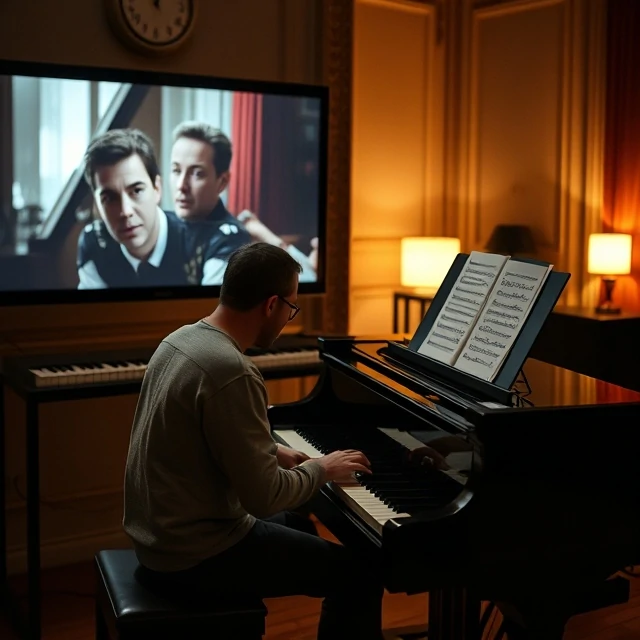
The score is the original instrumental music composed for a film. It is not the same as the soundtrack, which includes songs and other audio. The score is written specifically for the film, often by a composer who works with the director to define the musical language. The score supports the emotion, the action, and the theme. It can be sweeping and orchestral, or minimal and electronic. It can be a character in its own right.
The score is composed after the film is edited. The composer watches the film, discusses the tone with the director, and writes the music. The music is recorded, usually with an orchestra, and mixed into the film's soundtrack. The score must sync with the picture. A chase scene needs fast, percussive music. A love scene needs slow, lyrical music. A reveal needs a musical sting. The composer uses leitmotifs, recurring themes associated with characters or ideas. John Williams's score for Star Wars uses leitmotifs for Luke, Leia, and the Force. The leitmotif is a tool for storytelling.
The score can make or break a film. A great score elevates the emotion. A bad score distracts. The composer is a collaborator, not a servant. The best scores are not just background music. They are part of the film's identity. Think of the Jaws theme. Think of the Imperial March. The score is the sound of the film's soul.
Comments
No comments yet. Be the first to share a thought.
Leave a comment