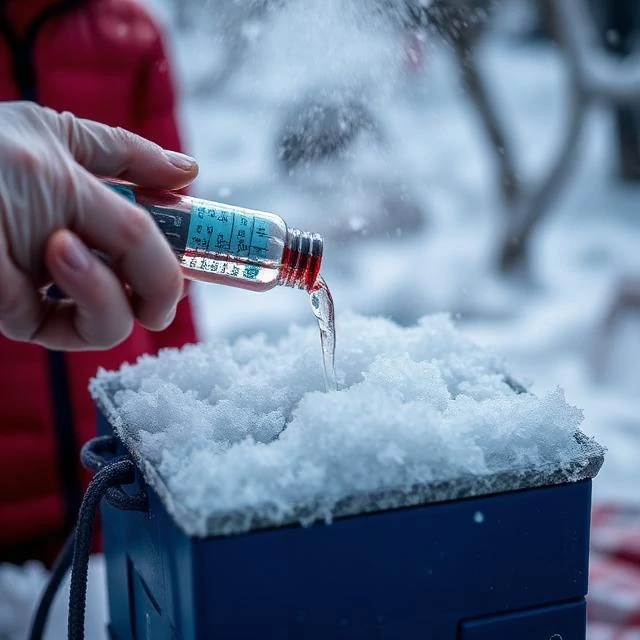
Baking soda and vinegar react and the mixture gets cold. That is an endothermic reaction, a reaction that absorbs heat from its surroundings. The products have more energy than the reactants, so the system takes energy from the environment. The temperature drops. Endothermic reactions are the opposite of exothermic reactions, which release heat.
The energy change comes from bond breaking and bond forming. Breaking bonds requires energy. Forming bonds releases energy. In an endothermic reaction, the energy required to break bonds is greater than the energy released when new bonds form. The net result is absorption of energy. The enthalpy change, delta H, is positive. The reaction is not spontaneous at low temperatures unless the entropy change is large enough to overcome the enthalpy.
Endothermic reactions are common. Photosynthesis is endothermic, absorbing light energy to convert carbon dioxide and water into glucose and oxygen. Thermal decomposition of calcium carbonate is endothermic. Dissolving ammonium nitrate in water is endothermic, which is why cold packs use it. The reaction between barium hydroxide and ammonium thiocyanate is strongly endothermic and can freeze water.
Endothermic reactions are used in cooling applications. Instant cold packs, self-cooling beverage cans, and some industrial processes rely on them. They are also important in biology, where endothermic reactions drive metabolism and maintain body temperature. The distinction between endothermic and exothermic is fundamental to thermochemistry.
Comments (2)
Leave a comment