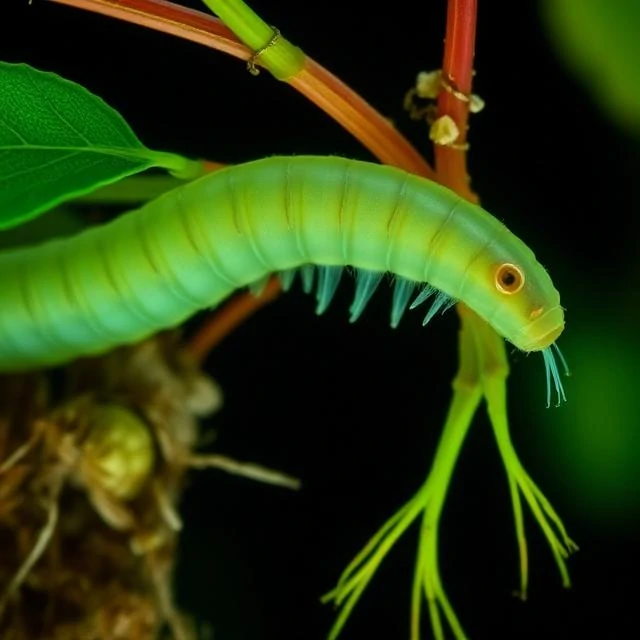
Nematodes are tiny roundworms, usually less than a millimetre long, that live in soil, water, and inside other organisms. Most are harmless or beneficial, breaking down organic matter and cycling nutrients. A few, however, are serious agricultural pests.
Plant-parasitic nematodes feed on roots with a needle-like stylet. Root-knot nematodes cause galls that disrupt water and nutrient uptake. Cyst nematodes, including the potato cyst nematode and soybean cyst nematode, form resistant cysts that survive in soil for years. Lesion nematodes open wounds that let fungi and bacteria in. Symptoms above ground look like drought stress or nutrient deficiency, which makes diagnosis tricky without digging up roots.
Management options
- Crop rotation with non-host species
- Resistant varieties, especially for soybean and potato
- Soil solarisation and biofumigation with mustard cover crops
- Nematicides, used sparingly because of toxicity and cost
Nematodes are hard to eliminate once established. Most management aims to keep populations below the level where they cut into yield.
Comments
No comments yet. Be the first to share a thought.
Leave a comment