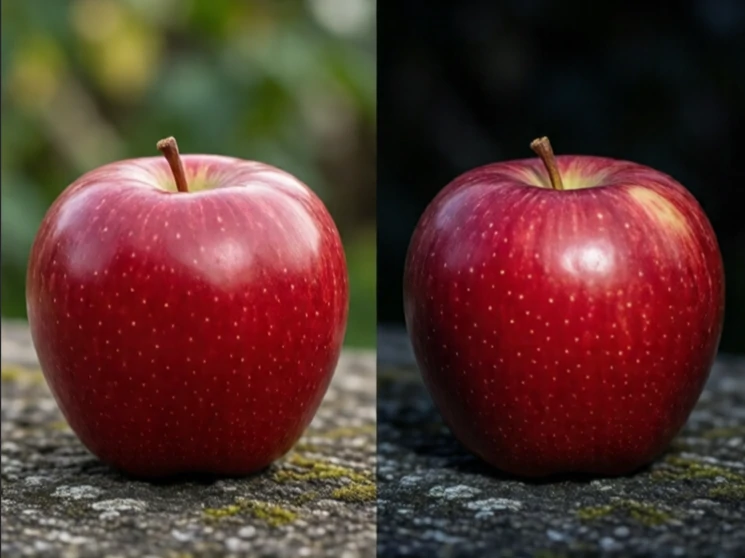
Color constancy is the tendency to perceive the colors of familiar objects as relatively stable even when the wavelength composition of the illuminating light changes. A white shirt still looks white under the greenish fluorescent light of a store, and a red apple still looks red at sunset.
The visual system achieves this stability by comparing the light reflected from an object with the light reflected from surrounding surfaces. Algorithms in the visual cortex estimate the color of the illuminant and discount it, recovering an approximation of the object’s surface reflectance. The process is not perfect—extreme lighting can defeat it—but under ordinary conditions it is remarkably effective. Without color constancy, object recognition would be far more fragile, because the same surface would produce wildly different retinal signals at different times of day.
Demonstrations with carefully controlled displays can make a gray patch appear green or red depending on the surrounding context, revealing the computational nature of the achievement. Color constancy is one of several constancies—size, shape, brightness—that keep the perceived world stable despite continual changes in the proximal stimulus.
We see the world as made of enduring colored surfaces, not as a shifting mosaic of wavelengths. Color constancy is a large part of the reason.
Comments
No comments yet. Be the first to share a thought.
Leave a comment