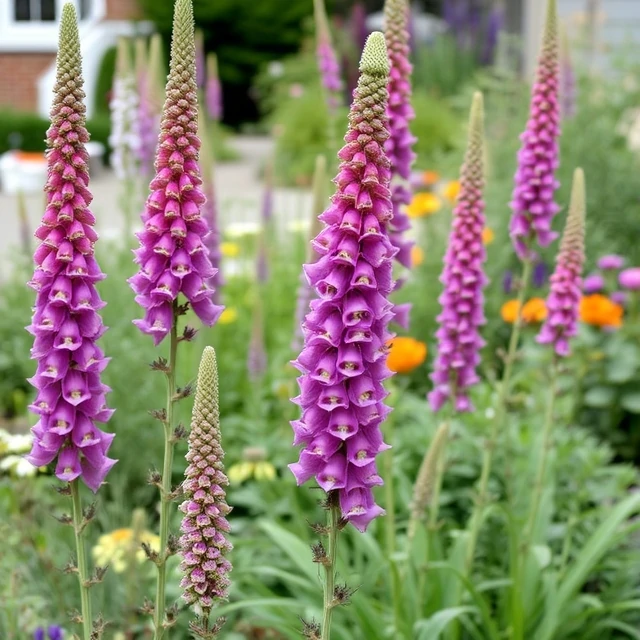
Not every plant finishes its story in one year. A biennial plant spends its first season building leaves and roots, then flowers, sets seed, and dies in the second year. The familiar pattern appears in foxgloves, hollyhocks, and many parsley varieties.
During the first summer the plant forms a sturdy rosette close to the ground. Winter cold often triggers the shift to flowering the following spring. Once the tall flower stalks appear and seed is produced, the plant declines. Gardeners who want continuous blooms sow biennials in successive years so that one group is always flowering while another is establishing.
Some biennials behave as short-lived perennials in mild climates, yet the classic two-year cycle remains the rule. Rich soil and consistent moisture in the first year produce stronger plants that flower more impressively the second season.
- Grows vegetatively in year one
- Flowers and sets seed in year two
- Examples include foxglove and sweet William
- Often self-seeds for future generations
Comments
No comments yet. Be the first to share a thought.
Leave a comment