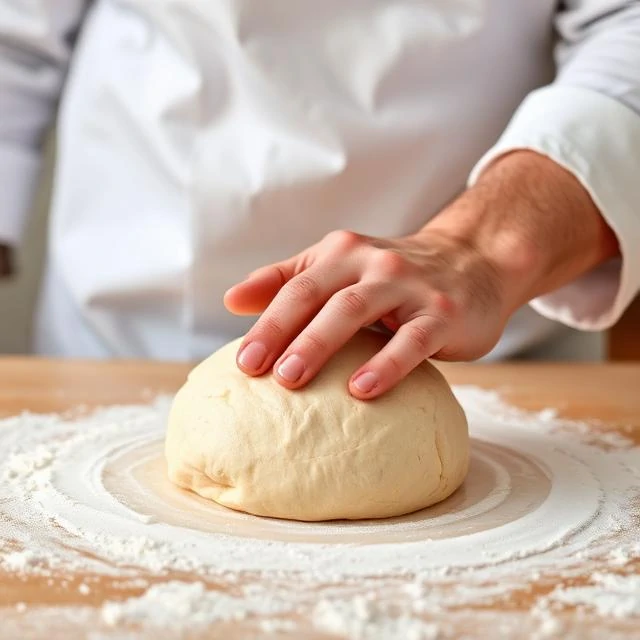
Kneading works dough by pressing and folding to develop gluten. The gluten is a network of proteins. It gives the dough its structure and its elasticity. The kneading stretches the gluten. It aligns the proteins. It makes the dough smooth and elastic. The dough is pressed with the heel of the hand. It is folded over. It is turned. It is pressed again. The motion is repeated. The dough is kneaded for 8 to 10 minutes. The dough is ready when it is smooth and springs back when poked. The kneading is the work. The dough is the reward. The bread is the result. The bread is the same.
Kneading can be done by hand or by machine. Hand kneading takes time and effort. It is a physical act. It is a meditation. Machine kneading uses a stand mixer with a dough hook. It is faster and less tiring. It is also less intimate. The cook does not feel the dough. The cook does not know the dough. The hand kneading is the connection. The machine kneading is the convenience. The choice is the cook's. The choice is the kitchen. The choice is the same.
Kneading is not always necessary. Some doughs, like pie dough and biscuit dough, are not kneaded. They are mixed until just combined. The gluten is not developed. The result is tender and flaky. The kneading is for bread. The no-kneading is for pastry. The technique is the same. The goal is different. The goal is the texture. The texture is the meal. The meal is the kneading. The kneading is the same. The same is the kitchen. The kitchen is the kneading. The kneading is the cook. The cook is the kneading. The kneading is the same. The same is the meal. The meal is the kneading. The kneading is the same.
Comments
No comments yet. Be the first to share a thought.
Leave a comment