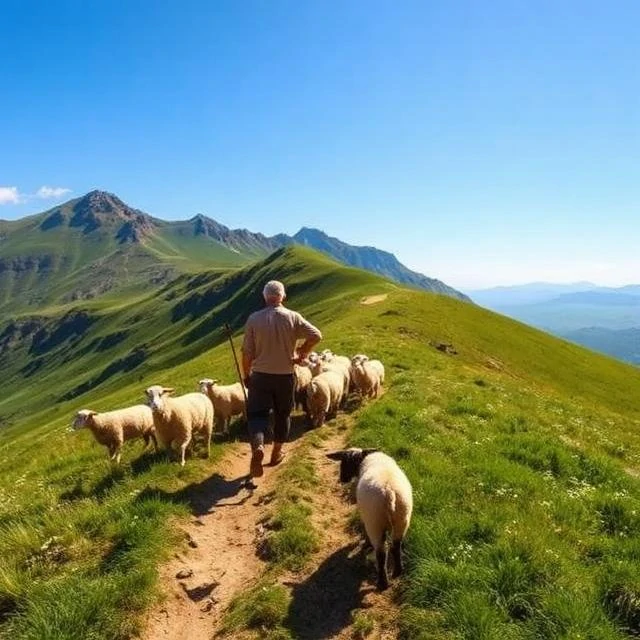
Transhumance is the seasonal movement of livestock between fixed summer and winter pastures. Unlike full nomadism, transhumance involves a home base. Herders move their animals to high mountain pastures in summer and bring them down to sheltered valleys in winter. The routes are traditional and often followed for generations. In the Alps, Spain, and the Middle East, transhumance has shaped landscapes and cultures for centuries.
The practice requires coordination. Families or villages may take turns sending herders with the animals. Women and children often stay behind to manage crops and households. Transhumance is under pressure from several directions: fences, roads, urban development, and climate change. When pastures are fragmented, herders cannot move. Some communities have abandoned the practice. Others have adapted, using trucks to move animals and selling cheese or wool to niche markets.
Key features
- Fixed summer and winter pastures.
- Seasonal movement, not constant wandering.
- A home base maintained by part of the family.
- Traditional routes passed down for generations.
Transhumance is not a relic. It is a working system that balances animal needs with environmental limits.
Comments
No comments yet. Be the first to share a thought.
Leave a comment