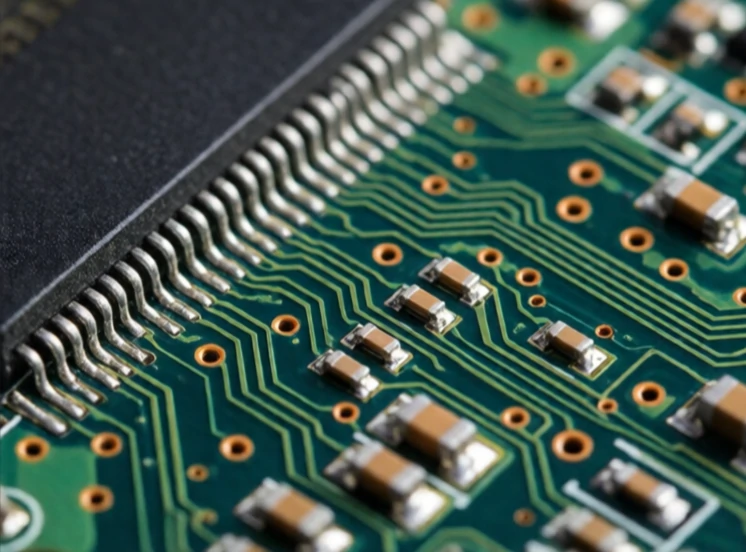
Flip a light switch and electricity flows through a circuit — a closed path through which electric current flows. Break the path and the light goes out. That is the whole idea. A circuit needs a power source, a conductor, and a load. The source pushes electrons. The conductor carries them. The load uses the energy.
Circuits can be simple or staggeringly complex. A flashlight has one loop. A microprocessor has billions of transistors switching on and off billions of times per second. The principles are the same. Current flows from negative to positive, though conventional diagrams show it the other way.
Basic types
- Series: components in a single loop, one break stops everything
- Parallel: components on separate branches, one break does not stop others
- Analog: handles continuous signals
- Digital: handles on/off signals
Circuit design is about managing voltage, current, and resistance. Ohm's law ties them together: V equals I times R. Get the math wrong and components burn out. Get it right and electrons do exactly what you want.
Comments
No comments yet. Be the first to share a thought.
Leave a comment