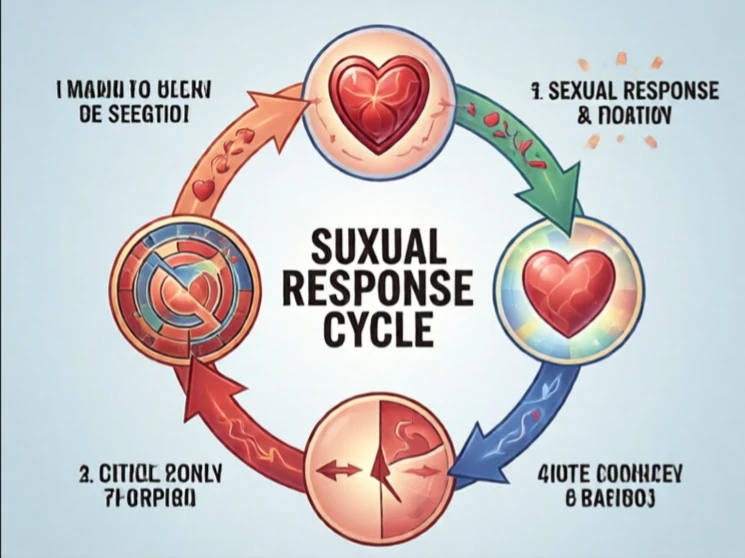
The sexual response cycle is the sequence of physiological stages that occur during sexual activity. Masters and Johnson described four phases: excitement, plateau, orgasm, and resolution.
In the excitement phase, blood flow increases to the genitals, heart rate and breathing rise, and sexual tension builds. The plateau phase is a period of sustained high arousal. Orgasm is the peak of pleasure accompanied by rhythmic muscular contractions and, in males, ejaculation. Resolution returns the body toward its unaroused state; males experience a refractory period during which further orgasm is temporarily impossible, while females may be capable of additional orgasms.
The cycle varies considerably among individuals and occasions. Psychological factors, health, age, and relationship context all influence the intensity and duration of each phase. Later models have emphasized the role of desire and the circular, rather than strictly linear, nature of sexual response, especially in women. The original four-stage description remains a useful clinical and educational framework.
From initial arousal to eventual return to baseline, the body follows a recognizable sequence.
Comments
No comments yet. Be the first to share a thought.
Leave a comment