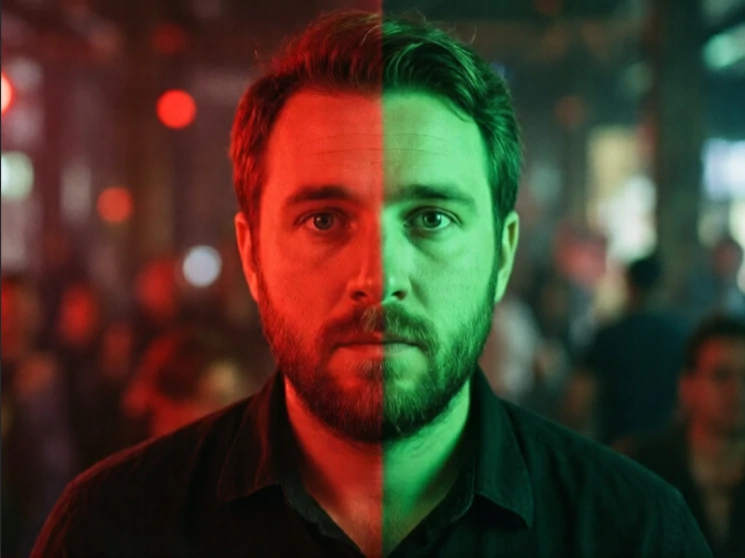
Opponent-process theory proposes that color vision depends on opposing pairs of processes: red-green, blue-yellow, and black-white. Stimulation of one member of a pair inhibits the other.
Ewald Hering originally suggested the idea to explain phenomena that the trichromatic theory could not easily handle, such as complementary afterimages and the fact that certain color combinations (reddish-green, bluish-yellow) are never seen. Modern physiology has identified opponent cells in the visual system that increase their firing to one color and decrease it to the complementary color. The theory operates after the initial three-cone stage, reorganizing cone signals into opponent channels.
Afterimages provide everyday evidence. Staring at a red surface and then looking at a neutral background produces a green afterimage, consistent with rebound in the opponent pair. The same logic applies to the other pairs. Opponent-process theory and trichromatic theory are now seen as complementary descriptions of successive stages in color processing.
When one color’s activity suppresses its opposite, opponent-process theory is describing the mechanism.
Comments
No comments yet. Be the first to share a thought.
Leave a comment