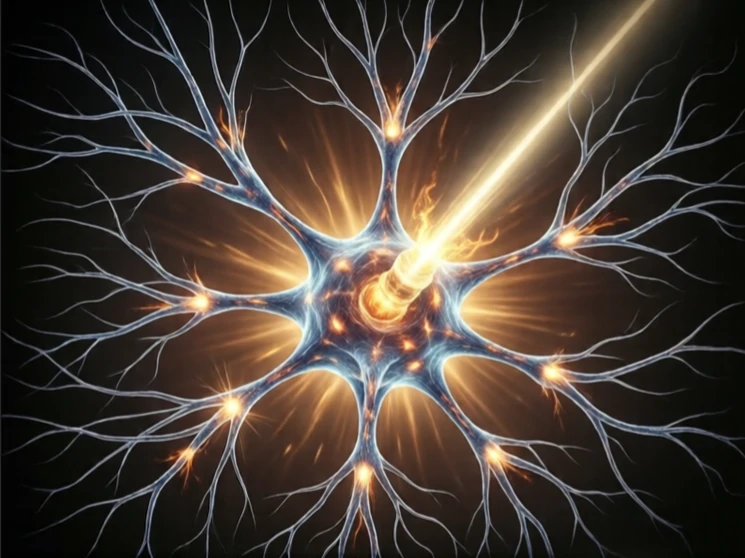
Feature detectors are specialized neurons in the visual cortex that respond selectively to specific features of a stimulus—edges of a particular orientation, movement in a certain direction, or angles of a given size.
David Hubel and Torsten Wiesel discovered these cells in the primary visual cortex of cats and monkeys. Simple cells respond best to a bar of light at a precise orientation and location; complex cells respond to the same orientation across a wider area and often to movement. Later stages of the visual pathway contain detectors for more elaborate features, including faces and objects. The hierarchical arrangement allows the system to build complex representations from elementary features.
Feature detection is not limited to vision. Analogous specialized cells exist in auditory and somatosensory cortices. The concept helped shift theories of perception from holistic templates toward a more analytical, building-block approach, while later work showed that context and top-down influences also shape the responses of even early feature detectors.
When the visual system registers a vertical edge or a moving contour, feature detectors are the first cells to announce it.
Comments
No comments yet. Be the first to share a thought.
Leave a comment