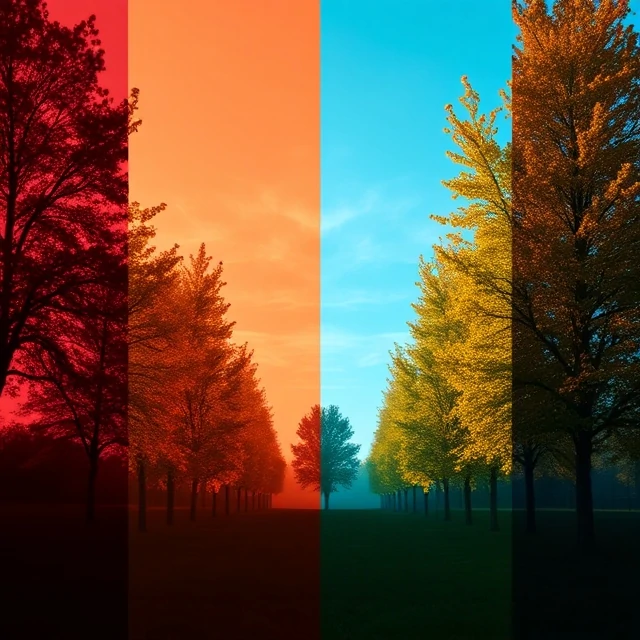
White balance is the adjustment of colors to render whites accurately under different lighting. The human eye adapts to different light sources automatically. A white shirt looks white in sunlight, in shade, or under tungsten bulbs. A camera does not adapt. It records the color of the light as it is. Without white balance, a white shirt under tungsten light looks orange. Under shade, it looks blue. White balance corrects for that, making white look white and other colors fall into place.
White balance can be set automatically, by the camera, or manually, by the photographer. Auto white balance works well in many situations, but it can be fooled by mixed lighting or scenes with a dominant color. Manual white balance uses a preset, like daylight, cloudy, tungsten, or fluorescent, or a custom measurement from a gray card. White balance can also be adjusted in post-processing, especially with RAW files. The choice of white balance affects the mood of the image. A warmer white balance feels cozy. A cooler one feels clinical or melancholic. Some photographers use white balance creatively, not just for accuracy. The goal is not always to make white look white. Sometimes the goal is to make the image feel right.
White balance presets
- Daylight. 5500 K, neutral.
- Cloudy. 6500 K, warmer.
- Shade. 7500 K, even warmer.
- Tungsten. 3200 K, cooler.
- Fluorescent. 4000 K, variable.
White balance is not the same as color temperature. Color temperature is a property of light. White balance is the camera's response to it.
Comments
No comments yet. Be the first to share a thought.
Leave a comment