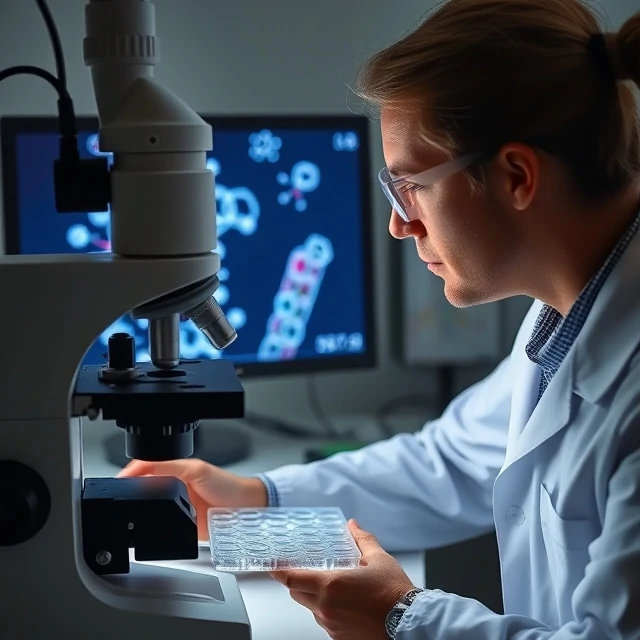
Finding a new drug is a process of elimination. You start with a biological target, a protein or pathway involved in a disease. Then you screen thousands or millions of compounds to find one that interacts with it. Most fail. The ones that pass become lead compounds, and the years of optimization that follow turn a promising molecule into a candidate that can be tested in humans.
Historically, discovery relied on natural products and serendipity. Penicillin came from mold. Aspirin came from willow bark. Today, researchers use high-throughput screening, computational modeling, and rational drug design. They can start with the structure of a target protein and design molecules that fit it, or screen vast libraries of compounds in days. Fragment-based discovery builds drugs piece by piece. Biologics discovery uses cells to produce antibodies or proteins that hit targets small molecules cannot reach.
Stages of discovery:
- Target identification. Finding a biological molecule involved in disease.
- Assay development. Building a test to measure activity.
- Screening. Testing large libraries for hits.
- Lead optimization. Improving potency, selectivity, and safety.
- Preclinical testing. Evaluating in cells and animals before human trials.
Most discovery programs fail. A compound that works in a test tube may not work in a cell, and one that works in a cell may not work in an animal.
Comments
No comments yet. Be the first to share a thought.
Leave a comment