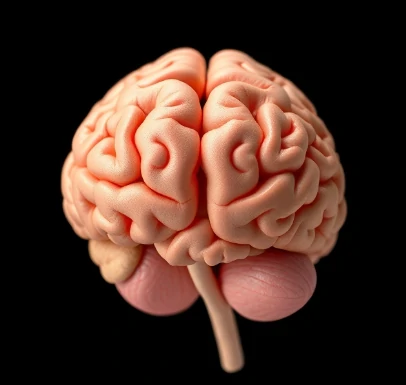
Buried beneath the cortex lies a set of interconnected nuclei that help select and initiate movements while suppressing competing ones. The basal ganglia also contribute to procedural learning and to the evaluation of rewards.
Major components include the striatum, globus pallidus, subthalamic nucleus, and substantia nigra. Cortical inputs arrive mainly at the striatum; outputs ultimately influence the thalamus and brainstem motor centers. The direct and indirect pathways within the circuit provide a push-pull mechanism for facilitating or inhibiting movement.
Degeneration of dopamine neurons in the substantia nigra produces the motor symptoms of Parkinson’s disease. Other disorders such as Huntington’s disease and certain forms of dystonia also implicate basal ganglia circuits. Deep-brain stimulation of these structures can alleviate symptoms in selected patients, underscoring their clinical importance.
- Group of nuclei regulating movement selection
- Involved in reward and habit learning
- Disrupted in Parkinson’s and Huntington’s
- Target of deep-brain stimulation
Comments
No comments yet. Be the first to share a thought.
Leave a comment